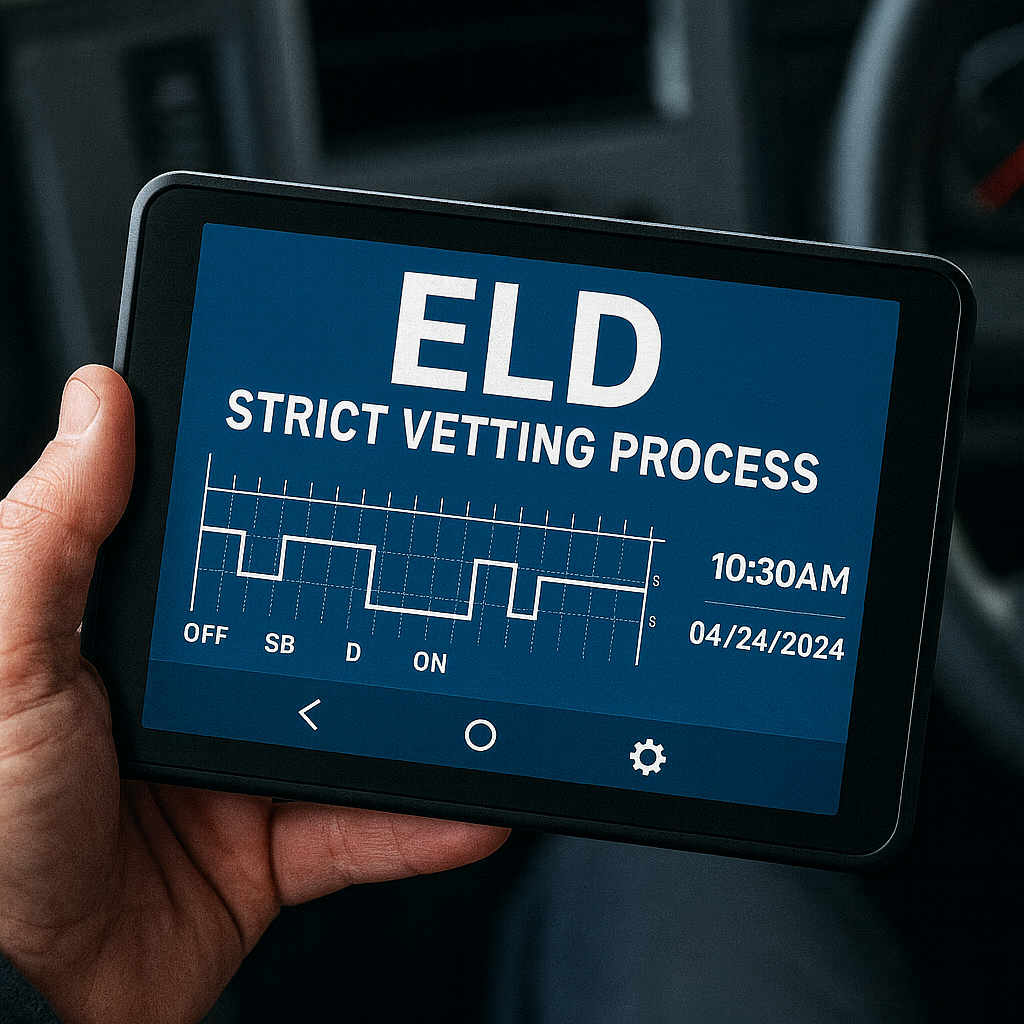
In an announcement in early December, the Federal Motor Carrier Safety Administration (FMCSA) said it would begin a “complete overhaul” of the vetting process for electronic logging devices (ELD). The agency hopes that after the overhaul, which has yet to be fully detailed, truckers will have confidence that the ELDs they purchase will be “accurate, reliable and compliant.”
Most commercial drivers have been required to use an ELD to track their work since a 2017 mandate, but ELD manufacturers can certify their own products, leading to a wave of non-compliant devices.

“American families deserve to feel safe sharing a road with semi-trucks, and we want truck drivers to have the best tools to maximize those safety precautions,” said FMCSA Administrator Derek Barrs in a press release.
He also said, “By strengthening our review process for ELDs, we are ensuring the industry can rely on trusted equipment and that hardworking drivers are prioritizing their health and well-being, so they are best prepared to keep driving America’s economy forward.”
Currently, there is no timeline for this vetting process, but the FMCSA said the new vetting will include an initial review, fraud detection, and a more stringent approval process.
ELDs have had a mixed history, with several examples of fraud, including a fatal crash in Virginia three years ago involving a ghost-driver scheme and fabricated ELD data run by a group in Lithuania.
The driver had been driving for seven consecutive days, accumulating about 75 hours on duty before the accident. He exceeded the 14-hour hours-of-service rule four times, the 11-hour rule three times, and the 70-hour weekly limit by more than 4 hours, but this information did not appear in his official ELD record. Three people were killed in a fiery crash near Williamsburg.
Some trucking organizations, including the Owner-Operator Independent Drivers Association (OOIDA), opposed the original ELD mandate and petitioned the U.S. Supreme Court in 2022.

At the time, OOIDA President Todd Spencer wrote, “Our members have vigorously opposed the ELD mandate since its inception. “There was never sufficient research indicating the mandate would improve highway safety, and the agency still lacks data demonstrating any positive safety results since its full implementation.”
The overhaul does involve four application categories for ELD approval:
• Category 1, approved, means the application met all requirements.
• Category 2: information requested means the application is pending further info
• Category 3: further review means additional internal assessment is needed.
• Category 4: denied, means the application doesn’t meet the required standards.
The new vetting process will hopefully eliminate products that are guilty of the worst abuses. New devices that have not been used regularly will face stricter analysis from the beginning, with cross-checking of those failed devices that are re-registered under different names. Unfortunately, the FMCSA does not have the resources to field-test every new device.
This will remain a documentation-based approval process, without the ability to do comprehensive field testing. The device’s actual accuracy still depends on a manufacturer’s honesty and technical competence.