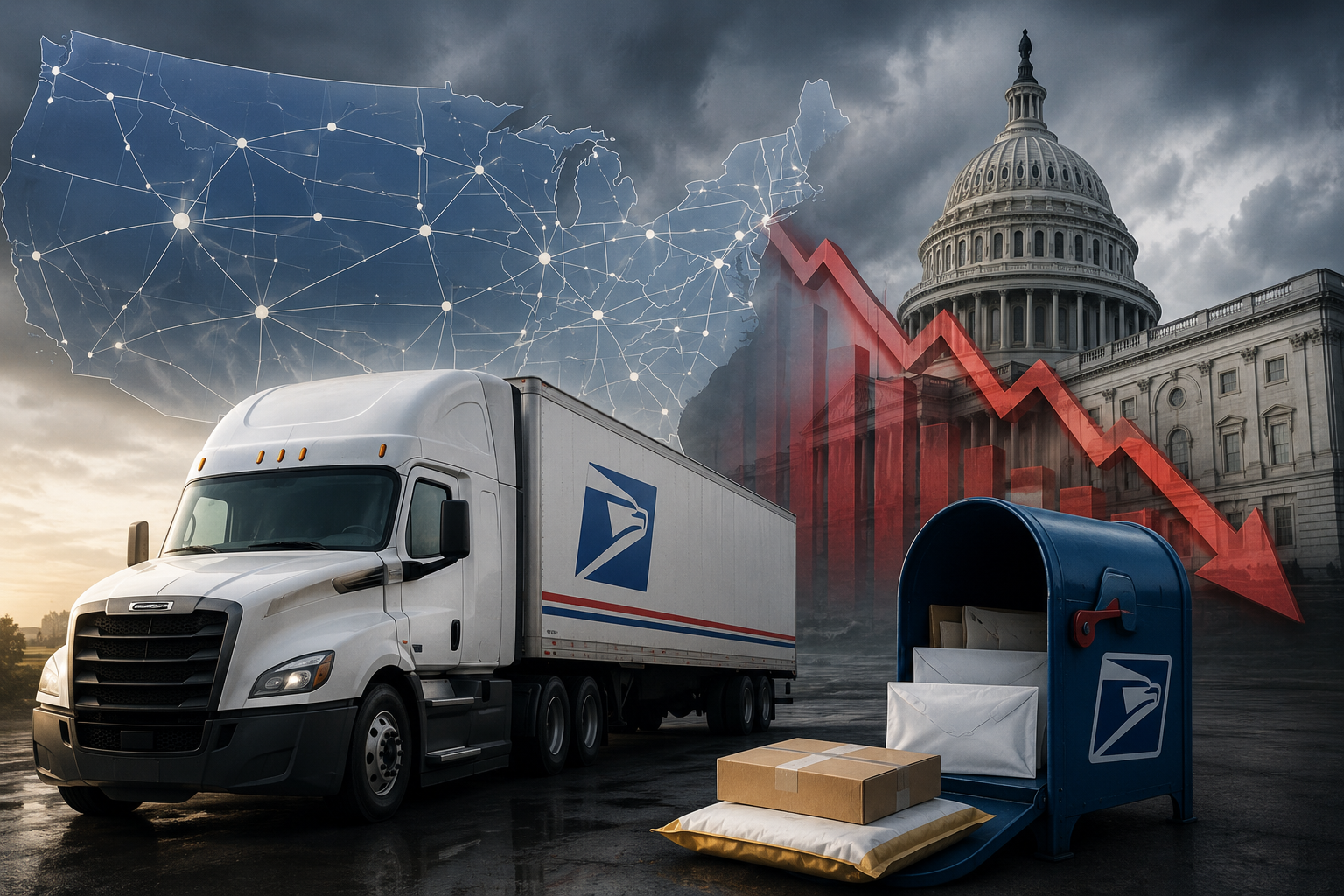
The U.S. Postal Service (USPS) has issued one of its strongest financial warnings yet, saying it could eventually be unable to pay trucking companies that move America’s mail if Congress does not act to address the agency’s growing cash crisis.
During testimony before Congress, Postmaster General David Steiner said the Postal Service has reached a critical point. USPS has already delayed billions of dollars in financial obligations to keep operating, but it warned that those temporary measures cannot continue forever.
“If our employees, contract transportation providers, and others don’t get paid, it’s highly likely that the mail will stop,” Steiner told lawmakers.

Why It Matters to Trucking
Thousands of trucking companies across the United States haul mail under USPS contracts. These carriers transport letters, parcels, and freight between processing centers, post offices, and regional hubs every day.
If USPS begins delaying payments, trucking companies could face:
- Cash flow problems from unpaid invoices.
- Difficulty covering payroll, fuel, insurance, and equipment costs.
- Reduced mail transportation capacity if carriers suspend service.
- Additional uncertainty for fleets that rely heavily on USPS contract revenue.
For many regional carriers, USPS is a dependable customer. A disruption in payments could have ripple effects throughout the trucking industry.
USPS Is Cutting Transportation Costs
The Postal Service has already been aggressively reducing transportation expenses as part of its restructuring plan.
According to USPS:
- Transportation costs have been reduced by approximately $2 billion over the past several years.
- Air and highway transportation spending has been cut significantly.
- More than 28,000 positions have been eliminated.
- The agency has reduced employee work hours by over 56 million hours.
Major Changes to the Mail Network
USPS is also redesigning its nationwide transportation system.
Instead of relying on numerous local processing facilities, the agency is consolidating operations into large Regional Processing and Distribution Centers (RPDCs) connected through a hub-and-spoke network.
Another initiative, called Regional Transportation Optimization (RTO), reduces the number of daily truck trips for post offices located more than 50 miles from a regional hub, often replacing them with a single daily trip. While this lowers operating costs, it may also extend delivery times in some areas.

Why USPS Is Losing Money
USPS says its financial problems are structural rather than operational.
The agency continues to deliver mail to roughly 170 million addresses six days a week, even though most delivery routes lose money. At the same time, First-Class Mail—the Postal Service’s most profitable product—has steadily declined as businesses and consumers switch to digital communication.
Since 2007, USPS has accumulated approximately $120 billion in losses, and leadership says cost-cutting alone will not solve the problem.
What Happens Next?
Steiner is urging Congress to approve long-term reforms, including:
- Financial support for federally mandated but unprofitable mail services.
- Greater operational flexibility.
- Changes to USPS funding and borrowing rules.
- Additional authority to improve its long-term financial stability.
For now, USPS continues normal operations, and trucking contractors are still being paid. However, the warning signals grow concern that, without congressional action, even critical transportation partners could eventually be affected.